
Number of layers on pallet
The number of layers on pallet field is registered for packages with packaging type PAL, and will be mandatory in NOBB Supplier from March 2026. In this field, you must register the number of layers placed on the pallet.
If the pallet consists of D-packs, the number of layers on pallet must show the number of D-pack layers.
If the pallet consists of F-packs, the number of layers on pallet must show the number of F-pack layers.
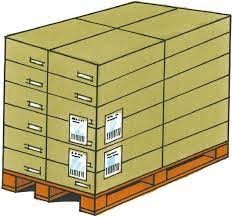
In the example shown below, the pallet consists of 24 cartons, and the number of layers on pallet shows how many layers of cartons are on the pallet.

In NOBB Supplier, the number you enter is checked automatically, as the calculated number per layer must be a whole number. The formula used is:
(Consists of quantity / number of layers on pallet).
In the packaging example above, the calculated number of cartons per layer is
24 cartons / 6 pallet layers = 4.
This means the pallet is stacked as shown here:
Exception for pallets with differing quantities per layer
If the pallet is stacked with a different number of units per layer, you can check the box “Layers on pallet is not relevant”. This applies, for example, if fewer packages are stacked on the top layer, or if every other layer contains a different quantity.
Why this field is important
The number of layers on pallet is used in warehouse management and transport planning, and is especially important for automated warehouses. The data ensures optimal use of storage space and supports automatic order picking.
Additionally, it provides better visibility of product flow, reduces the risk of errors, and improves planning processes throughout the value chain.
In short: The number of layers on pallet makes logistics more predictable, secure, and cost-efficient for all parts of the value chain.